Closing Gift Studio · buyer guide
House portraits versus personalized address plaques
For Closing Gift Studio worldwide orders, a house portrait and a personalized address plaque can celebrate the same purchase while asking different things of the buyer. A portrait makes the appearance of the property the main subject. An address plaque makes a short place identifier the main subject.
Reviewed 2026-09-05 · AI-assisted editorial review. General buying guidance; illustrative scenarios are not customer case studies. Images are AI-generated concepts.
Choose between them by considering the intended display and the recipient's preferences before comparing decorative styles or proposed prices.
For a portrait, confirm which view of the home the buyer wants remembered. For an address plaque, confirm exactly where it is intended to go and whether it is decorative or expected to perform an identification function. Do not assume a closing gift should replace an existing address sign. The property owner should choose whether a supplied piece becomes part of the home, and any functional requirements need their own project review.
How do you prepare the portrait reference deliberately?
Select a photograph that shows the architectural features the recipient cares about. List intentional changes separately: perhaps omit a parked car, keep a distinctive tree or use a later photograph after an agreed renovation. Ask the artist to flag details that are obscured. Inventing a doorway behind foliage may produce an attractive drawing that no longer represents the actual house.
Record permission to use the source image for the commissioned artwork. A listing image found online should not be treated as an unrestricted design asset merely because the buyer purchased the property. Ask the appropriate rights holder or provide an authorized replacement photograph. Specify whether the brief is for a stylized interpretation or close architectural detail so the proof reviewer knows what accuracy means for this gift.

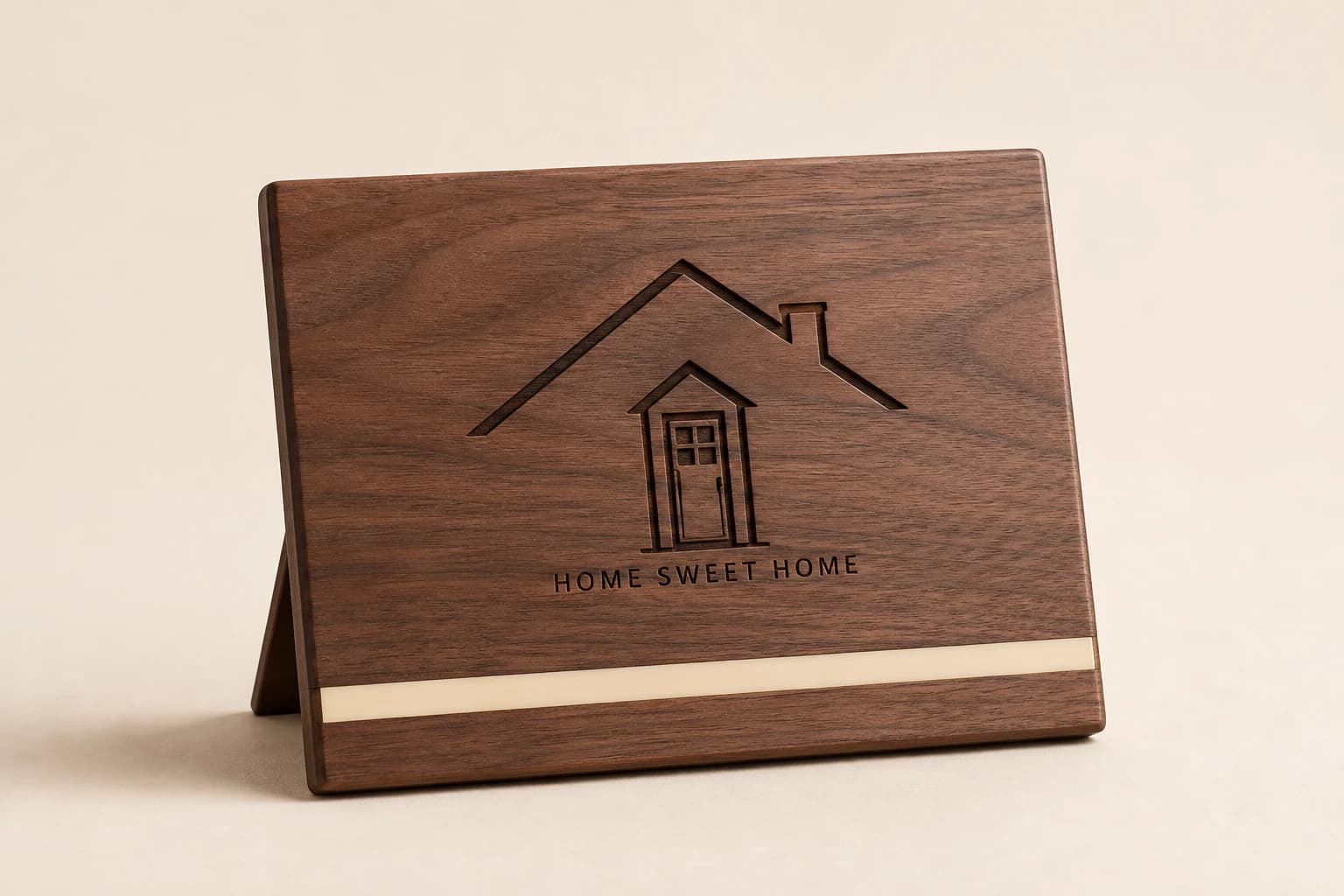
How do you specify the address plaque as an object?
For the plaque, supply the intended text exactly, including unit information when it belongs in the display. Separate the address being celebrated from other postal details that would make the design crowded. A street number, street name and decorative family line do not have to share the same visual emphasis.
Have the buyer approve that hierarchy instead of deciding it from a contact database.
Describe the proposed location with photographs and useful measurements. State whether the piece is intended indoors or outdoors, how it might be supported and which surface would receive it. Ask the maker and appropriate project reviewer to confirm the actual construction and attachment proposal. A catalog material label alone does not establish suitability for a particular wall, climate or identification requirement.
How do you review two different kinds of accuracy?
The portrait proof should let the reviewer examine the house, crop, color treatment and any requested omissions. The address plaque proof should make the exact characters and their arrangement easy to inspect. Both need the agreed personal wording, but the largest error risk can be different: a wrong roofline in one case and a transposed house number in the other.
Request the proposed physical dimensions and an actual-size layout when assessing small text. A reduced image on a phone can make every concept look equally readable. If a portrait includes a long dedication, consider whether the text should move to a separate card. If a plaque includes a detailed house illustration, confirm that it still serves the purpose chosen at the start rather than becoming an unresolved mixture of two gifts.
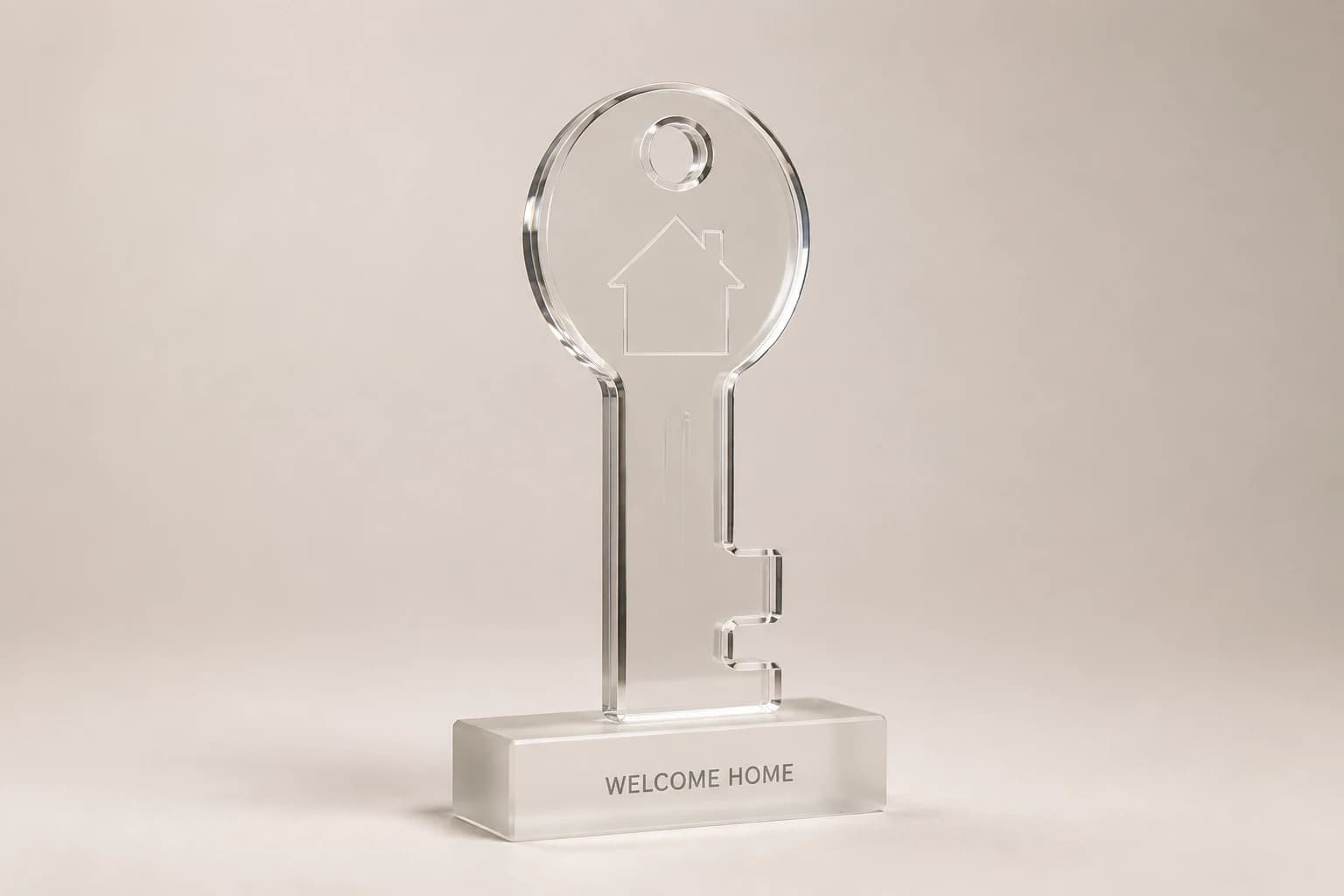
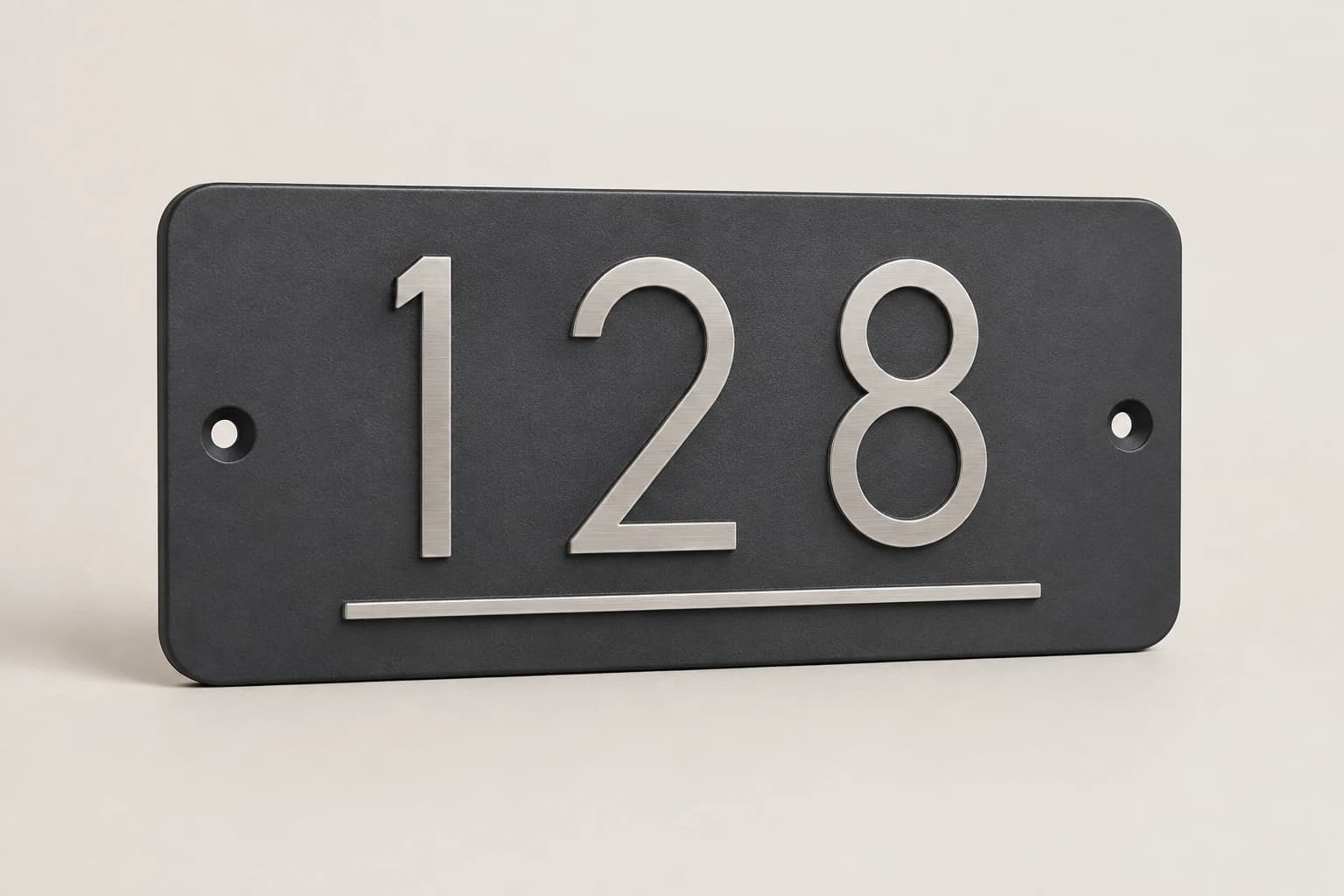
Illustrative example: How do five portraits and three plaques total eight gifts?
Imagine a fictional agent team preparing gifts for eight completed transactions. Five households prefer a house portrait and three prefer a decorative address plaque. Each household receives one object. The order is five plus three, or eight pieces; there is no automatic reason to order an extra object for each buyer named in the transaction.
Enter eight units, one piece per unit and zero extras and spares in the quantity calculator. Its answer is eight total pieces. The worksheet splits that total into the two gift types and includes a field for either the photo reference or the measured location brief. Those references are sample labels, not approved artwork or measurements.
If one household later asks for both formats, add one explicitly authorized extra piece. The total becomes nine while the number of transactions remains eight. Update that household's scope and personalization references. The calculator can reconcile the count, but only the coordinator can ensure the extra plaque depicts the right address and the portrait uses the intended photograph.
How do you compare the full proposal and handoff?
Ask each proposal to identify the physical format, artwork work, personalization, display components and requested packaging. A digital portrait file, a printed portrait and a framed object are different deliverables. Likewise, an engraved panel and a complete installed plaque are not equivalent scopes. Compare quotes only after those distinctions are written clearly.
Decide what happens if the buyer has not chosen a display location. One reasonable route is to present a gift card explaining the commissioned piece while holding physical specifications until the recipient replies. Another is to choose a freestanding or framed concept after discussing preferences. Avoid surprising someone with installation responsibility. After approval, keep the photograph and address proof linked to the individual gift reference so a future reorder does not rely on a generic file named final-house.
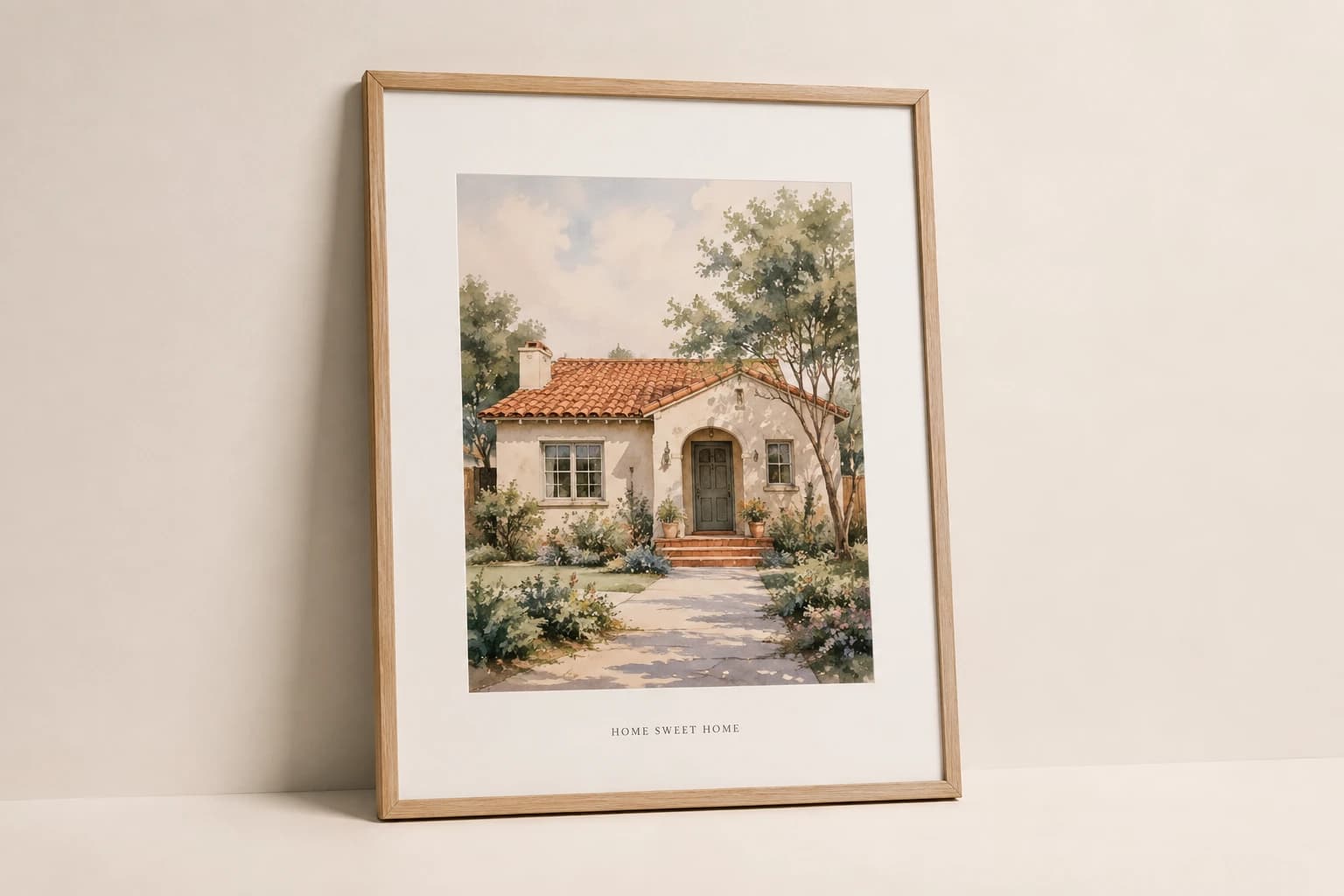
Use the article’s example files
Fictional example rows show how to separate physical quantities, wording and approval references. Replace them with your project schedule. HOLD and SAMPLE entries are not production instructions.
How do you keep the property reference separate from the receiving address?
Use different fields for the home depicted or named on the gift and the place where the parcel will be received. They may be the same address, but that should be confirmed rather than assumed. A temporary residence, agent office or other agreed receiving point can be appropriate when the buyer is moving.
Keep delivery contact information in the order workflow rather than printing it on an inscription proof.
Build a compact release record with a gift reference, approved artwork revision, quantity, personal wording status and confirmed handoff plan. If one of those fields changes, identify the affected work rather than sending an ambiguous instruction to update everything. A corrected surname can affect engraving and a gift note without changing the property drawing. A new shipping destination can affect the dispatch arrangement without changing the artwork.
At receipt, match each personalized object to its reference before presenting it. Do not rely on a familiar house silhouette to distinguish two similar properties in a batch. Keep an approved proof for a possible replacement, and resolve retention of personal information through the team's own information-handling process. The useful purchasing record describes what was authorized; it need not become a second repository of confidential transaction documents.
Before requesting artwork, decide who owns the client relationship and who can approve the personal details. The gifting coordinator may organize files, while the buyer is the best source for a preferred household name or a changed delivery address. Record their approved display wording without sending a purchase contract, financing information or an entire transaction file. Production needs a small, accurate instruction set.
A gift should also be practical once it leaves the closing table. Discuss where the recipient might display it, whether they will carry it during a move and whether a separate enclosure is wanted. Compare the complete object and the handoff together. A beautiful concept that creates an unexpected installation task may be a poor match for the intended recipient. Ask about the proposed presentation before selecting an image solely for its appearance.
Which option fits this order?
Choose the portrait when the property image is the main personal subject, or the plaque when the buyer wants an approved address display for a defined location. Compare authorized artwork, physical construction and included supports. A digital image, framed portrait and mounted plaque are different deliverables even when they celebrate the same home.
| Option | Useful when | Scope to resolve |
|---|---|---|
| House portrait | The appearance of the property is the personal story and the buyer wants artwork for an agreed display area. | Authorized reference photograph, architectural interpretation, crop, print or other physical format, and whether a frame is included. The House Portrait offers portraits made from property photographs. |
| Decorative address plaque | The buyer wants a concise place identifier and has chosen where the object will sit or mount. | Exact address wording, dimensions, exposure, support proposal and any functional identification review. |
| Portrait plus separate gift card | The image should remain visually quiet while a longer congratulatory message accompanies the gift. | Which wording belongs permanently on the artwork and which belongs only in the enclosure. |
Sources: The House Portrait: Realtor Closing Gifts | Personalized House Portraits
What should buyers confirm before ordering?
Portrait and plaque decisions depend on the intended display, authorized image and exact physical scope. Ask about cost by complete deliverable and confirm the buyer’s preferred wording before release. The following answers distinguish photo interpretation, address text and installation components so a personal gift does not create an unexpected project for its recipient.
What changes the cost of a portrait compared with an address plaque?
Closing Gift Studio quotes should distinguish a digital or printed portrait from a complete physical address plaque. Artwork interpretation, dimensions, personalization, frames or supports, packaging and delivery can change the scope. Compare the complete proposed object and included work rather than assuming that two house-themed images represent equivalent products or prices.
Can the portrait omit cars or landscaping?
Describe every requested omission and have the artist confirm the scope. The proof should preserve the architectural details that matter to the recipient; do not assume an obscured feature can be reconstructed accurately. Keep a marked reference showing the features that must remain accurate. A separate omission list is easier to review than asking the artist to make the house look nicer without explaining what may change.
Should a plaque include the full postal address?
Use the buyer-approved display text. Mailing fields and visible plaque wording have different purposes. A long postal line should not be copied automatically into a decorative design. Have the buyer approve the complete visible line, including any unit reference. The shipping label can retain the full delivery address while the artwork uses a separately selected decorative inscription.
Does an address plaque arrive ready to install?
Confirm the included components and the actual installation proposal in writing. An image of a mounted concept does not establish what hardware, professional work or site approval your order includes. Ask the proposal to identify supports, attachment components and any excluded work. The intended location still needs its own review even when a concept image shows the plaque already mounted.
Can one property photograph support both gift ideas?
An authorized photograph can inform a portrait and a decorative plaque concept, but it does not supply the plaque’s physical measurements or installation specification. Keep the artwork reference separate from the location brief. The buyer should approve what the image represents and the maker should assess the actual proposed object.
Sources and scope
The sources below support the cited technical details. The ordering workflows are editorial recommendations. Your project specification, price and schedule are established in the written quote and approved proof.
- The House Portrait: Realtor Closing Gifts | Personalized House Portraits · checked 2026-09-05
Which buying guide should you read next?
All buying guidesSet the gifting unit explicitly so co-buyers, multiple households and separate personal keepsakes receive the intended number of gifts.
Decide how the agent is acknowledged while keeping the permanent keepsake suited to the client’s home and display preferences.