Closing Gift Studio · buyer guide
Replaceable photo plaques or directly printed closing keepsakes?
Choose a replaceable photo construction when the recipient should be able to change the photograph later. Choose direct printing when the approved image is intended to remain part of the keepsake. For Closing Gift Studio worldwide orders, confirm the image layer and access method explicitly; an acrylic cover alone does not prove replaceability.
Reviewed 2026-09-05 · AI-assisted editorial review. General buying guidance; illustrative scenarios are not customer case studies. Images are AI-generated concepts.
This decision concerns how the photograph becomes part of the object. A print held behind a removable cover, a permanently enclosed print and an image printed onto a surface may look similar in a front photograph. They create different choices for future photographs, cropping, visible edges and what can be repaired or replaced.
Start with the recipient's likely use. An agent may want a fixed closing-day photograph, while the household may prefer a display that can later hold another family image. Neither purpose determines the material automatically. Ask the maker to describe the physical layers so the gift matches the intended ownership after handover.
How can you tell a covered print from direct printing?
Ask where the image physically sits and whether it can be removed without damaging the product. A covered print is a separate image layer; direct printing puts the decoration on the selected surface. The quotation should state the construction in plain language, including backing, cover, image orientation and any accessible opening.
Mpix describes its acrylic blocks as photographs printed directly on acrylic with a white screen backing. That is a useful example of direct printing, because acrylic is part of the image construction rather than merely a protective sheet over a loose photo. The description applies to that maker's block and does not establish how another photo plaque is made.
For a wood plaque with an acrylic cover, ask whether the cover is fixed or removable and whether the print sits in a recess, pocket or another arrangement. If the maker proposes a sealed construction, describe it as fixed-image even though the photograph began as a separate print. The recipient should not discover the access limitation by trying to dismantle the gift.
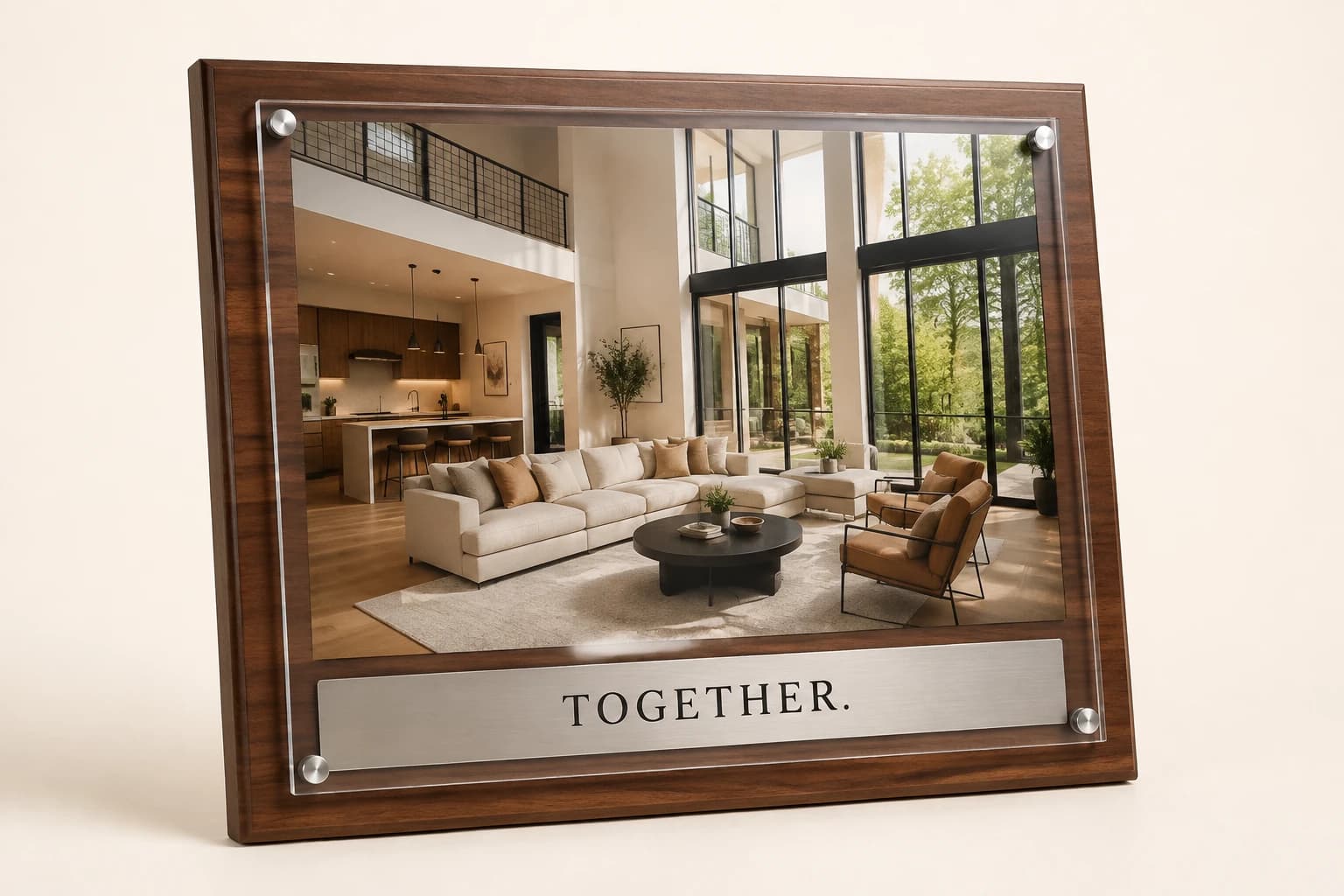
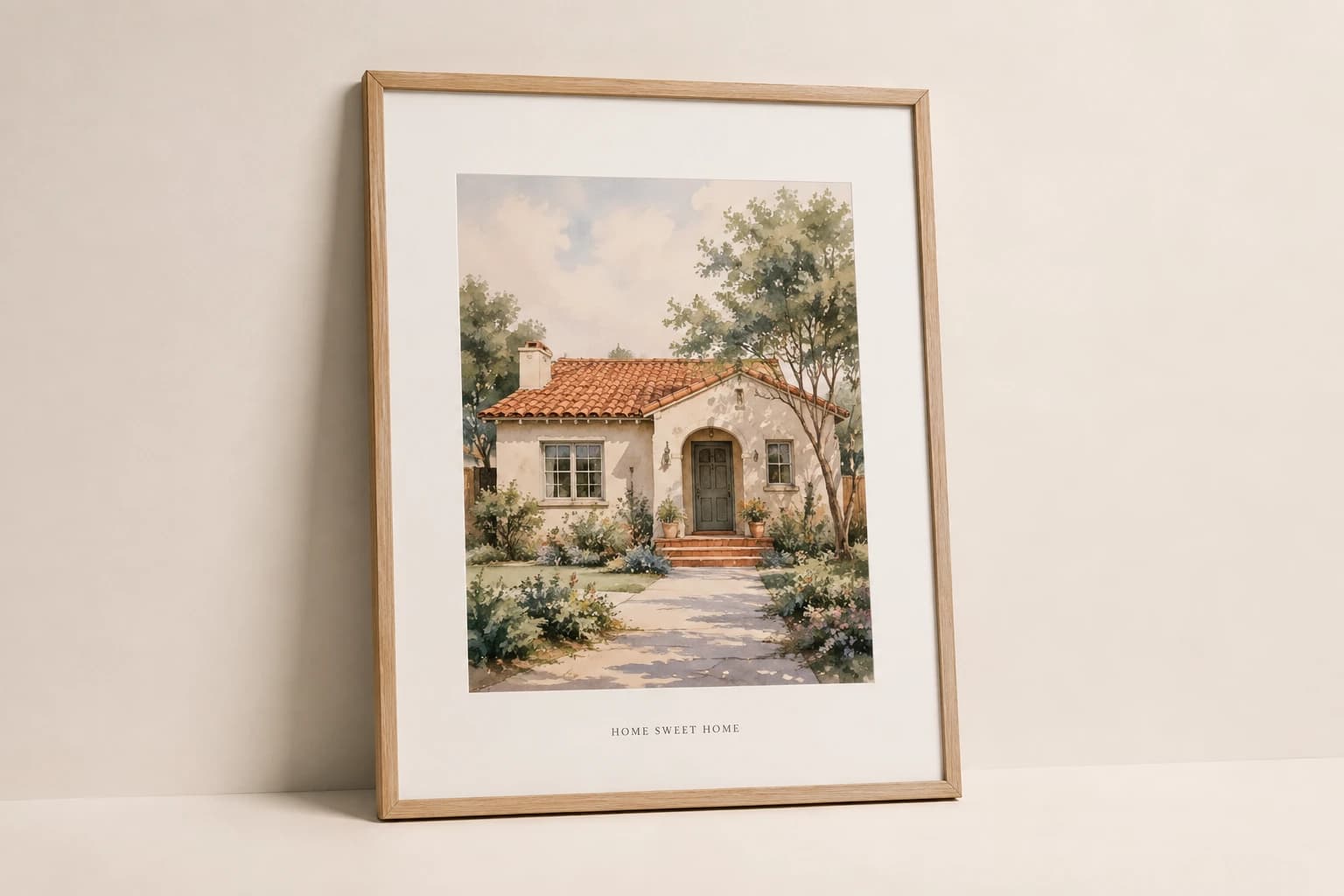
Sources: Mpix: Custom Acrylic Photo Blocks
How should you choose the photo crop before ordering?
Choose the final visible image shape before approving the photograph. Compare the full image with the exact crop at the proposed display ratio, keeping important people and house details inside the visible boundary. An attractive uncropped file can lose a face, doorway or caption when fitted into a different rectangle.
Ask the proof to show both the image edge and any area hidden beneath the cover or border. A maker may need a larger print than the visible window. Keep those dimensions separate so the agent does not crop to the outer plaque size and then lose another strip behind a frame. The approved crop should have its own reference.
If the original is tall and the selected plaque is wide, consider changing the product orientation or adding intentional margins before cutting away the subject. Do not stretch a photograph to fit a shape. Let the crop review decide whether this product is right for the image rather than forcing the chosen photograph into a catalog silhouette.
What difference does an image backing make?
Specify whether the image should appear opaque or allow the background to influence its appearance. A white backing, transparent area or separate support can change how a photograph reads in the finished object. Review the proposed construction with a relevant sample rather than treating a bright screen preview as a material proof.
A family photograph often contains pale clothing, sky and small details near the edge. Ask how those areas will appear in the proposed process and what the reverse will show. A direct print described as acrylic does not, by itself, answer whether the image is viewed through the material, printed on the front or backed with another layer.
For a replaceable print, confirm what keeps the image flat and aligned behind the cover. Ask whether the recipient needs a particular paper size or thickness for future replacements. Keep the care guidance specific to the selected layers; instructions for a wood base may not be the instructions for the acrylic cover or printed face.

Should the photo gift stand on a desk or hang on a wall?
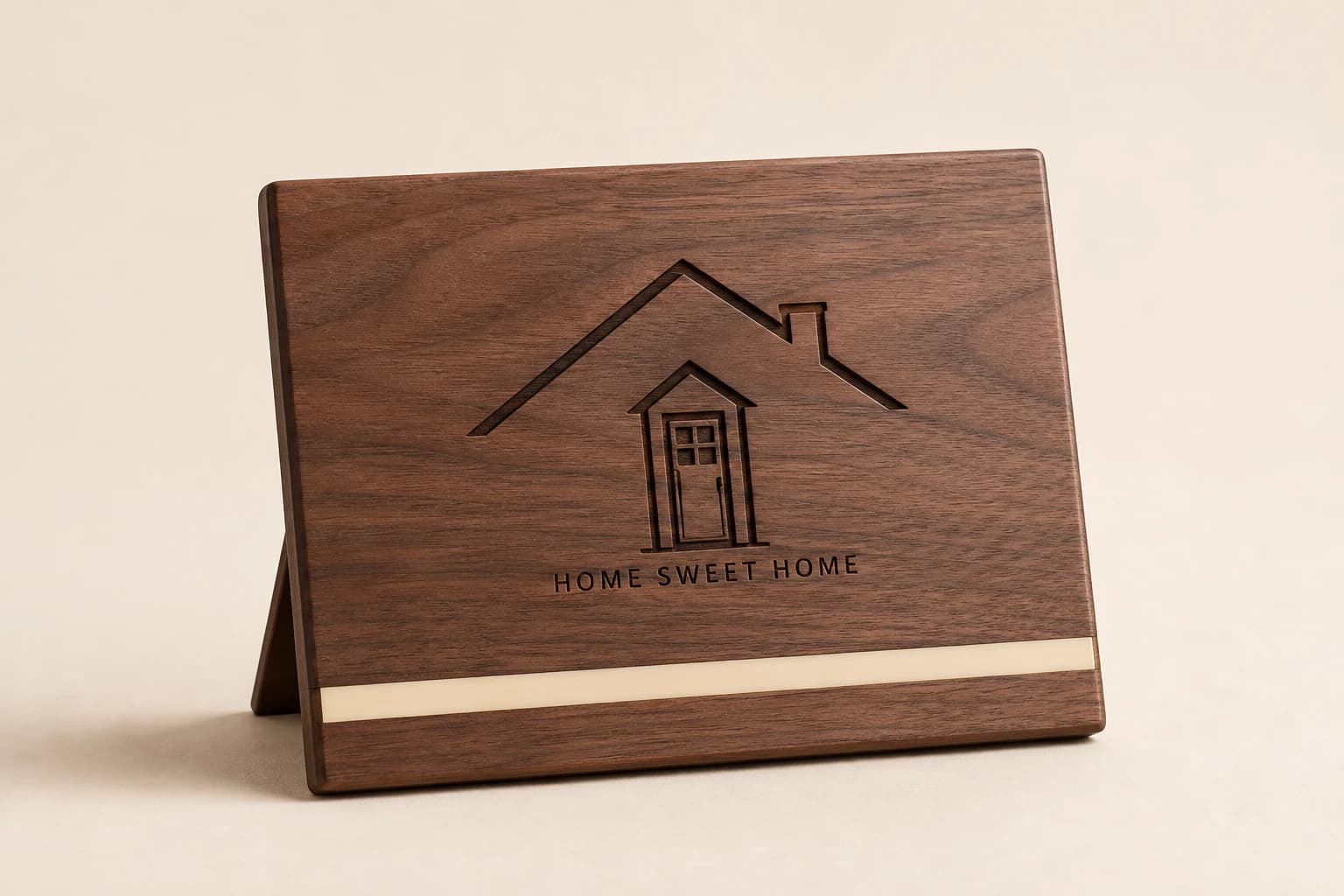
Choose the display method before finalizing the photo orientation. A tabletop keepsake needs a defined standing arrangement and enough room for its complete footprint. A wall plaque needs a specified hanging arrangement and a clear viewing orientation. Ask which support or hardware is included rather than inferring it from a styled product photograph.
Consider whether a replaceable photograph will require access from the back. A wall-hung display may need to come down whenever the photo changes. A tabletop object may use a removable cover that needs space beside it. These are practical product questions, not reasons to reject one format universally.
Ask the recipient's preference when it is available. If it is a surprise gift, choose a modest display brief and avoid assuming the household has a suitable wall location. Record the overall object size as well as the visible image area. A decorative border can make the plaque substantially larger than the photograph it contains.
Illustrative example: how does the crop change the product choice?
In this illustrative closing-gift brief, an agent compares one landscape photo plaque with one square direct-print keepsake for the same photograph. The image is 3000 by 2000 pixels. The buyer chooses a replaceable landscape display because it keeps the full composition and lets the household change the photograph later.
The landscape image has a three-to-two ratio. A centered square crop using the full 2000-pixel height keeps 2000 pixels of width and removes 1000 pixels overall, or 500 from each side. Those are fictional file dimensions used to explain the crop, not a resolution requirement or an assurance of print quality. The important house doorway sits within one removed side strip in this example.
The agent orders two identical complete landscape displays for two separately approved household gifts. Two times one equals two physical pieces; the two compared design options are not both purchased. The worksheet records the selected crop, rejected square crop and required removable-cover confirmation so the arithmetic does not hide the actual buying decision.
Use the article’s example files
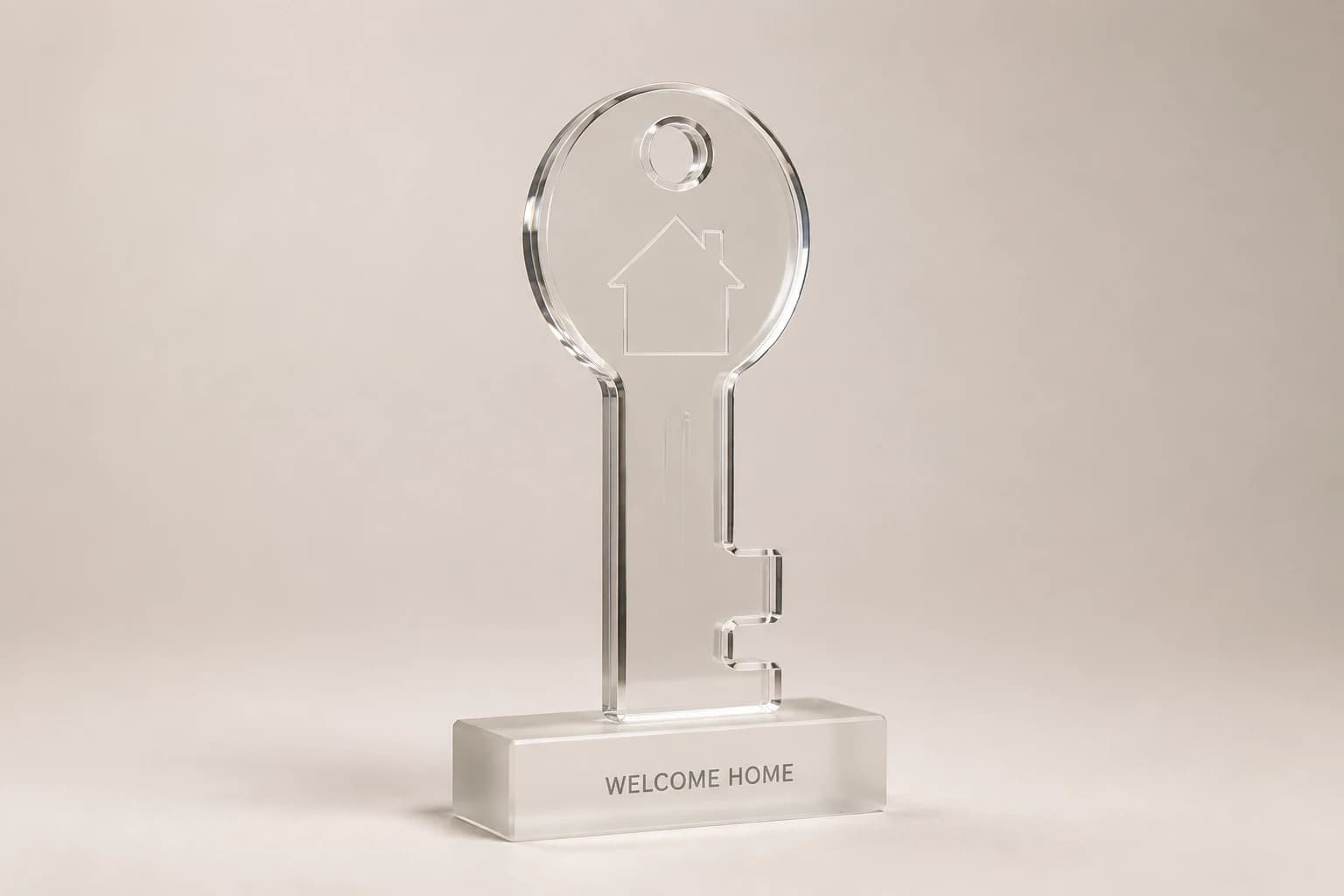
Fictional pixel dimensions demonstrate crop arithmetic only. Replace the example with your actual file and the maker’s visible-area drawing; no sample dimension is a production specification.
What should the recipient know about changing the photo?
Give the recipient the maker's instructions for replacing the photograph only if the selected construction is designed to open. Include the required print size, orientation and closure method. A simple replacement guide is more useful than describing every covered photo plaque as reusable, especially when the cover is permanently attached.
If replacement is part of the gift's purpose, request an empty template or a dimensioned image-window note that the recipient can retain. Identify which edge should face upward and whether any part of the image sits behind a border. The instruction should describe the delivered product, not a generic picture frame.
For direct printing, explain that the image is fixed and keep the final approved file with the agent's order record. A later photograph would require a new decorated component or object if the maker offers one. Do not promise that the image can be peeled away or reprinted over; that depends on the actual process and product.
What should a photo-plaque quote include?
A useful photo-plaque quote identifies the image process, visible crop, overall dimensions, cover access and display support. Ask whether image preparation and a physical sample are included or separate. Compare proposals only after those details match; a fixed direct-print block and an opening photo holder are different purchases despite similar pictures.
Send Closing Gift Studio the chosen photograph, preferred orientation, intended display method and destination for the worldwide enquiry. State whether future photo replacement is essential or simply an option you are considering. That lets the maker propose a suitable construction before polishing the border, caption or agent note.
Approve the crop and physical construction separately but keep their references together. A change from landscape to square can affect both composition and display support. The brief is complete when the buyer knows what part contains the photograph, what part opens, what is included and which version of the image will appear in the finished gift.
How do the three photo constructions compare?
Compare photo keepsakes by image access and visible construction rather than by the word acrylic alone. A removable covered print, permanently enclosed print and direct print can each create a different ownership experience. Choose the version that preserves the intended photograph and gives the recipient only the replacement options the product actually supports.
| Option | Removable covered print | Fixed enclosed print | Directly printed surface |
|---|---|---|---|
| Can the image change? | Yes only through the maker-confirmed opening and replacement method. | Treat the image as fixed unless a specific serviceable component is offered. | Treat the decoration as fixed; request a new printed component if that is an available option. |
| What crop is approved? | The visible window and any hidden border area, alongside the full replacement-print size. | The final visible composition before the image is enclosed. | The image boundary and any required backing or transparent regions. |
| What should the sample show? | Cover access, alignment and how the print sits when the object is displayed. | Image appearance through the cover and the finished edge treatment. | The proposed printing surface, reverse and backing treatment. |
| What goes home with the gift? | Product-specific replacement and care instructions, with the image-size template. | Care instructions and a clear understanding that the supplied image stays in place. | Care instructions for the decorated surface and a record of the approved photograph. |
What should agents ask about photo closing keepsakes?
Photo construction questions should be resolved before a closing keepsake is personalized. The most useful answers identify the image layer, crop and display support without assuming that all acrylic products work alike. Cost and timing then relate to the actual chosen object, including any sample review or image preparation still needed.
What affects a photo keepsake quote and schedule?
The unit should be a complete photo display with its image process, cover or backing and support stated. Size, image preparation, custom border work and sample review can change the proposal. Closing Gift Studio needs the actual destination and required date; a direct-print competitor's advertised dispatch time is not a schedule for this project.
Does an acrylic cover mean I can replace the photograph?
No. A cover can be permanently fixed, or it can form part of a removable assembly. Ask how it opens and what replacement-print size it accepts. If the maker cannot describe a designed access method, treat the photograph as fixed and choose another construction when future image changes are an essential part of the gift.
Can a landscape photograph become a square plaque?
Yes if the approved crop preserves the subject, or if the design uses intentional margins within the square. Review the exact composition before ordering. Do not stretch the image to fill the shape, and do not assume that keeping the center automatically preserves a person or house detail near an edge.
Will the print look exactly like my screen?
Use the screen proof to approve composition and wording, then ask how the proposed process, backing and material affect the finished image. A screen alone is not a physical color sample. If a particular image treatment matters to the gift, request the maker's appropriate sample or proof option before releasing production.
Should an agent choose a fixed or replaceable image as a surprise?
Choose a fixed image when that specific photograph is the intended keepsake and its use is approved. Prefer a replaceable construction when the household's future choice is part of the gift. If the recipient's display preference is unknown, avoid building the order around an assumed wall location or a required large footprint.
Sources and scope
The sources below support the cited technical details. The ordering workflows are editorial recommendations. Your project specification, price and schedule are established in the written quote and approved proof.
- Mpix: Custom Acrylic Photo Blocks · checked 2026-09-05
Which buying guide should you read next?
All buying guidesChoose a portrait for a memory of the home or an address plaque for a defined display location, then brief the appropriate artwork and physical construction.
Decide how the agent is acknowledged while keeping the permanent keepsake suited to the client’s home and display preferences.